Insurance
Pooling a risk that would ruin one person across many who each pay a little.
The invention
The problem. A single lost ship destroyed a merchant. The risk was survivable collectively and fatal individually.
Genoese merchants wrote the first separate marine insurance contracts in the 1340s. In 1688 Edward Lloyd's coffee house became where shipowners and underwriters met, and the syndicate model that grew from it still operates. Insurance is the oldest formal technology for making an uncertain future survivable.
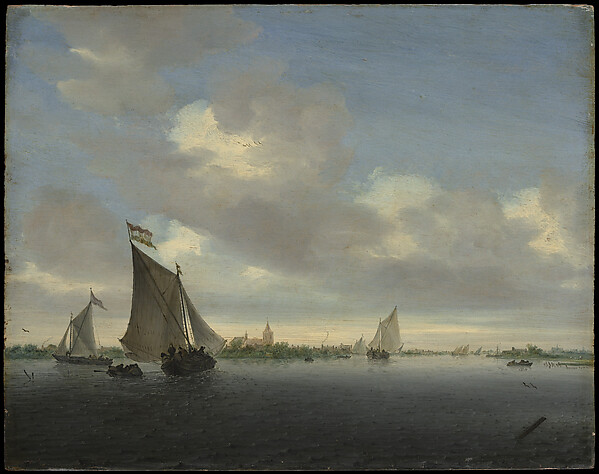
Marine
1650 · The Metropolitan Museum of Art · CC0

San Francisco earthquake and fire, April 18, 1906
1906 · Library of Congress · Public domain
Where it has failed
Not a list of disasters. A pattern library.
- 1906San Francisco
The earthquake and fire
Claims bankrupted a dozen insurers; Lloyd's paid in full, which built its reputation permanently.
Insurance concentrates correlated risk. One event, every policy in the region, all at once.
- 1992London
The Lloyd's asbestos crisis
Long-tail liabilities ruined thousands of individual Names whose liability was unlimited.
Risks can take decades to surface. A policy written in 1950 destroyed people in 1990.
- 2008New York
AIG
An insurer's derivative unit wrote protection on mortgage securities without reserving as an insurer would; the rescue exceeded $180bn.
Insurance written outside insurance regulation is still insurance, and still needs reserves.
- 2020sCalifornia, Florida, Australia
Insurers withdraw
Major carriers stopped writing property cover in wildfire and flood zones entirely.
Insurance requires the risk be estimable. When it stops being estimable, the market does not reprice — it leaves.
Where it stands today
You now have the shape. Here is the reading.
Live from public data, pulled at request time. Read it with the failures above in mind — not because a repeat is due, but because knowing the mechanism is what lets you recognise one early.
CPI, all items
U.S. Bureau of Labor Statistics via FRED
No data returned
FRED (St. Louis Fed) needs FRED_API_KEY in your environment. It is free to obtain — see the sources screen for the link.
U.S. Bureau of Labor Statistics via FRED
In your ledger
A contractual line in almost every ledger, and the one most likely to reprice sharply on events far from your own behaviour.
See it in the demoKeep reading