The ledger
A durable record of who owes what to whom. Everything else here is built on top of it.
The invention
The problem. A temple economy outgrew the memory of the people running it. Grain came in, rations went out, and nobody could hold the account in their head.
The oldest writing anyone has found is not poetry or law. It is accounting — clay tablets recording barley and beer, pressed with a reed stylus. Humans needed to record debt badly enough to invent literacy for it, and only later got around to stories.
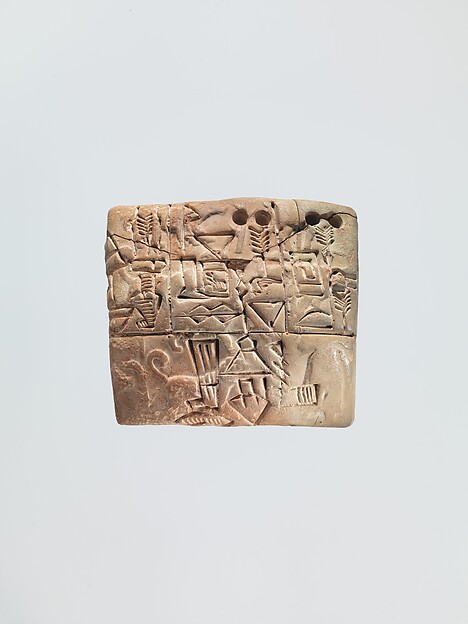
Proto-Cuneiform tablet with seal impressions: administrative account of barley distribution with cylinder seal impression of a male figure, hunting dogs, and boars
ca. 3100–2900 BCE · The Metropolitan Museum of Art · CC0
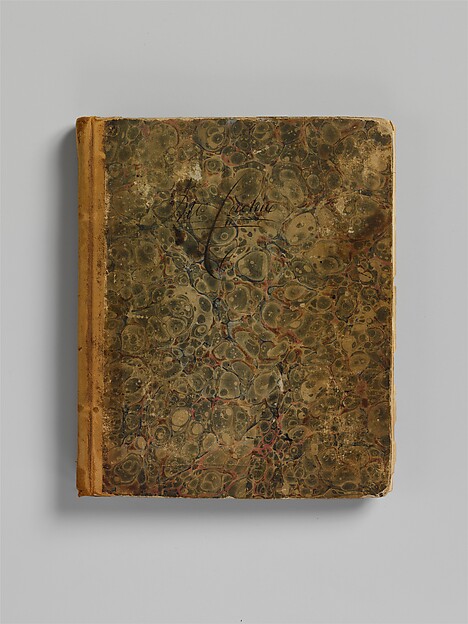
Account Book Ledger
1835–56 · The Metropolitan Museum of Art · CC0
Where it has failed
Not a list of disasters. A pattern library.
- c. 1780 BCEBabylon
Debt jubilees written into law
Hammurabi's code capped interest and voided debts after failed harvests; Mesopotamian kings periodically erased consumer debt outright.
The oldest ledger-keeping societies built a release valve in. Perpetual compounding against people who cannot pay was understood as a stability problem four thousand years ago.
- 1494Venice
Double-entry standardised
Pacioli published what Venetian merchants already used: every entry recorded twice, so an error announces itself.
The innovation was not arithmetic but a structure where mistakes cannot hide. The same reason this app keeps raw rows append-only.
- 2001Houston
Enron
A ledger telling a story its own transactions did not support, sustained by entities built to keep obligations off the page.
A record is only as good as what it refuses to omit. Every accounting scandal is ultimately a provenance failure.
In your ledger
The append-only design here descends directly from double-entry. Corrections are new revisions; a mistake stays visible instead of quietly disappearing.
See it in the demoKeep reading