Silver
For most of history the actual money of daily life, while gold sat in vaults.
The invention
The problem. Gold was too valuable for ordinary transactions. Something was needed for a day's wages.
Mesopotamian debts were denominated in silver by weight long before coins existed. Spanish silver from Potosí later became the first genuinely global currency, circulating from Manila to Antwerp — the world's first monetary system, built on one mountain and the forced labour that emptied it.
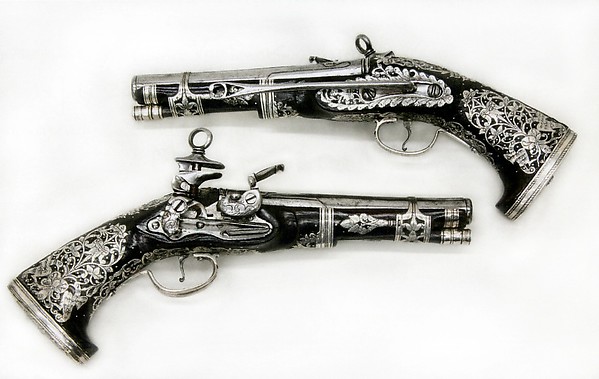
Pair of Miquelet Pistols
dated 1757 · The Metropolitan Museum of Art · CC0
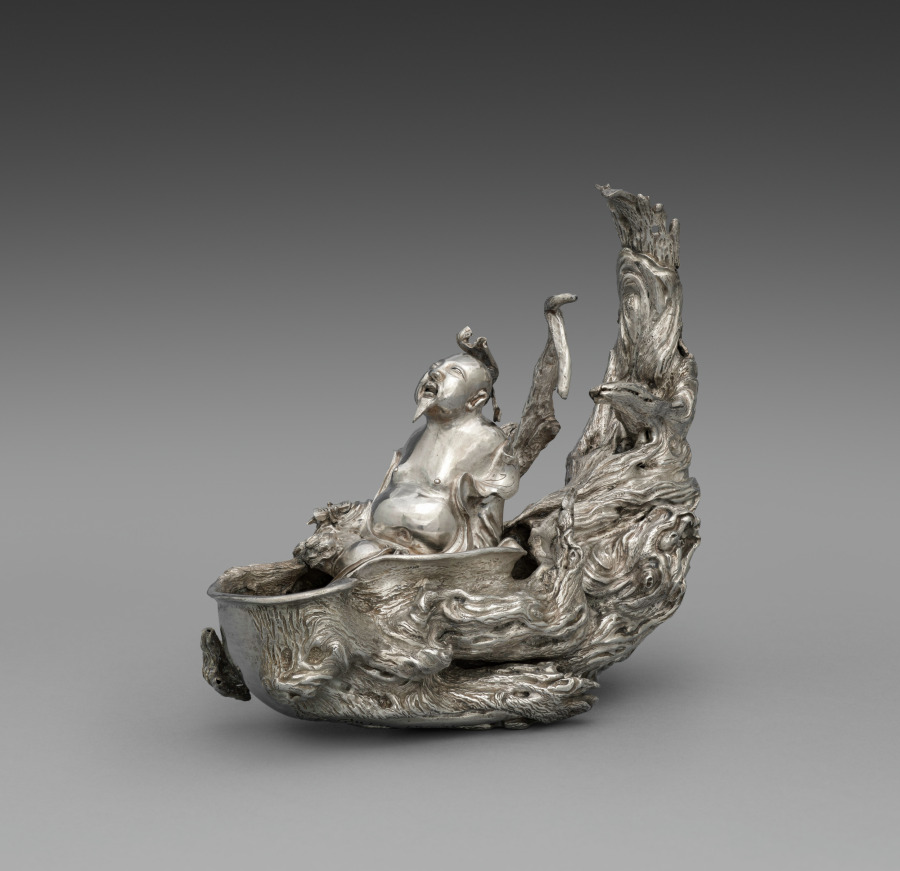
Raft Cup
1300s–1400s · Cleveland Museum of Art · CC0
Where it has failed
Not a list of disasters. A pattern library.
- 1545–1700Potosí, Bolivia
The mountain that funded an empire
Vast silver output financed Habsburg Spain and drove price inflation across Europe for a century.
A monetary windfall is not the same as wealth. Spain imported bullion, exported inflation, and deindustrialised.
- 1873United States
The Crime of '73
Silver was dropped from coinage, contracting the money supply and deepening a depression that lasted years.
Changing what counts as money redistributes wealth between debtors and creditors. It is always a political act.
- 1980New York
The Hunt brothers' corner
An attempt to corner silver pushed prices to roughly $50, then collapsed over 50% in a single day when exchange rules changed.
Cornering a market means your exit has no counterparty. Leverage plus illiquidity has one ending.
In your ledger
Silver's history is a warning about liquidity: an asset with a quoted price is not the same as an asset you can exit at that price.
See it in the demoKeep reading